


Disclaimer: I am not a dermatologist. I am a 30-something woman who got curious about what she was actually putting on her face every night — and whether any of it was working.
I don’t have perfect skin. Redness, acne-prone and large pores are my skin’s downfall. However a couple years ago I actually began that consistent routine and it has changed my skin so much for the better. Is it perfect? No, but I’m continuing to grow an understanding of what the ingredients actually do, and have a genuine desire to show up to my forties better than I would have if I’d done nothing. That’s it. Those are my qualifications and I hope this opens up conversation throughout the BABBLE community to share what works for them so we all can have glamorous skin…with a realistic skincare plan! Don’t drop that 60 step routine in the comments. Ain’t nobody got no time for that nonsense.
First — how many steps do you actually need?
The skincare industry would love for you to believe the answer is twelve, twenty, fifty-two! It’s not.
Dermatologists consistently agree that a great nighttime routine comes down to three things: cleanse, treat and moisturize. Everything else is optional (or excessive). Four to six products done consistently will always outperform ten products done sporadically. And bonus points, everything on my list is super accessible. You can run to Target and get them all today.
Here’s my routine. Six steps. Every night.
Step 1 — Micellar water Remove the day before you wash the day
Micellar water is made up of tiny cleansing molecules called micelles suspended in water. They attract oil and dirt and lift them from your skin without drying it out or requiring a rinse. Think of it as the pre-game to washing — getting the majority of your makeup off before your actual cleanser does the deep work.

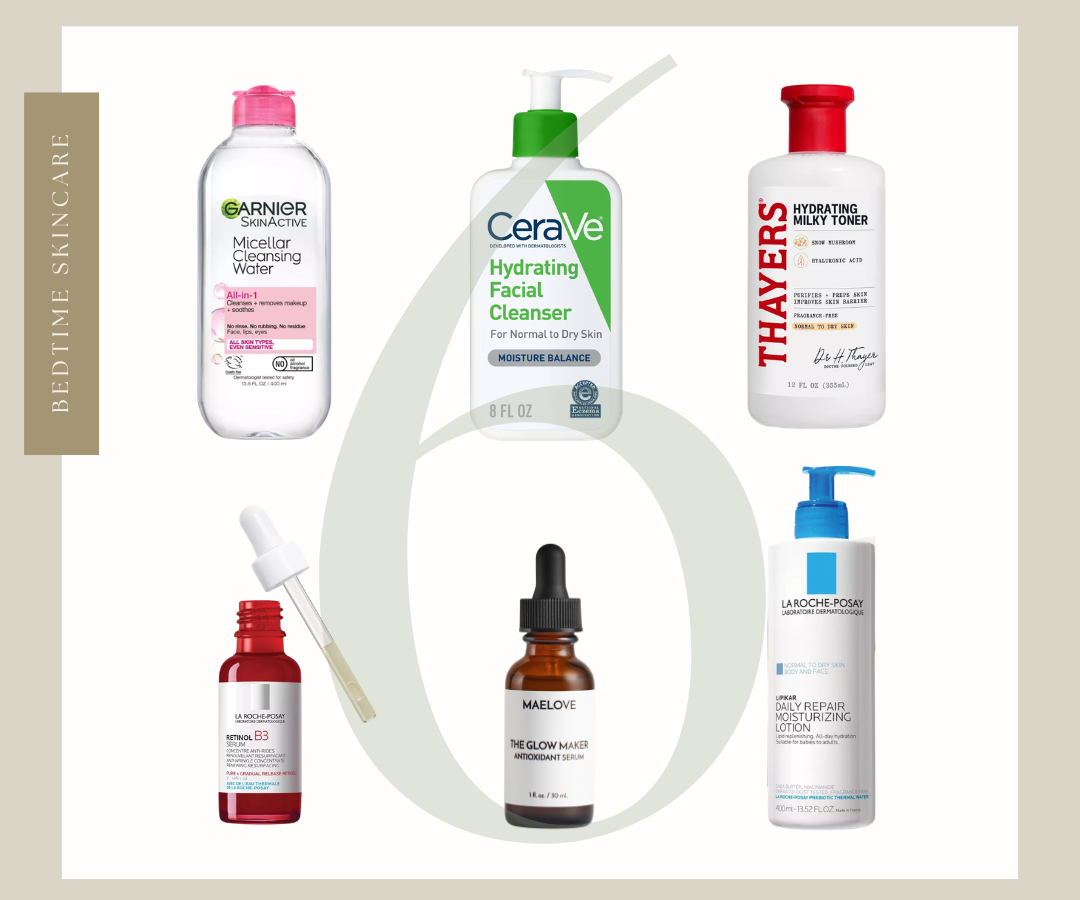
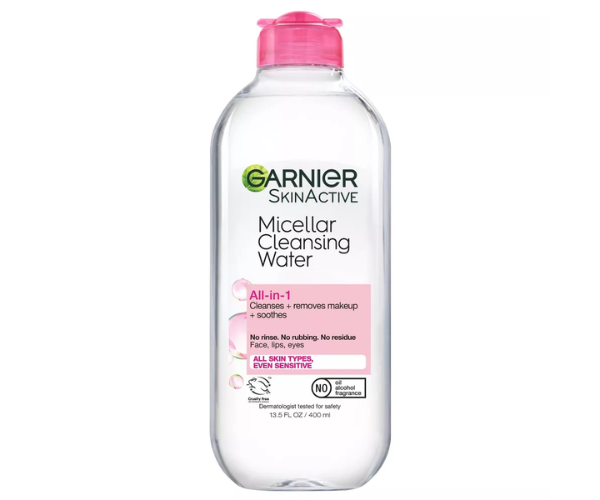
My go-to: Garnier SkinActive Micellar Cleansing Water — accessible, fragrance-free, works on all skin types. Dermatologists specifically praise it for giving excellent results compared to even more expensive options. At around $10 it’s genuinely hard to beat and lasts quite a while.
Application note: I used to douse a cotton pad and use it to remove my makeup. Then I thought about how many of those bags I went through a year…I’ve since changed to utilizing a free and eco-friendly option…my hands! Pour it into your hands and douse your face just like you’re washing it. Yes, you go through the bottle a little faster…you can’t win ’em all.
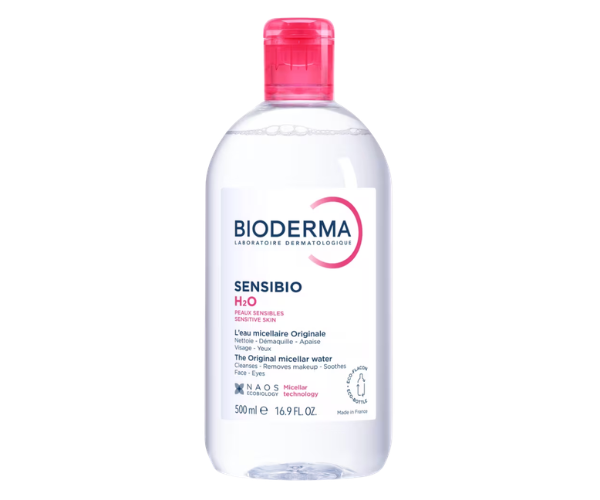
Potential to try: Bioderma Sensibio H2O is considered the gold standard micellar water by multiple dermatologists — minimal ingredients, low irritation risk, great for makeup removal, cleansing, hydrating and soothing all in one. On my list to try next and compare to Garnier.
Step 2 — Cleanser The actual wash
Here’s how I use mine — and this matters. Before wetting my face I rub my cleanser directly onto dry skin on top of the micellar water residue. Then I wet my hands to activate the suds and scrub for about 30 seconds. Full rinse. Pat dry with a clean towel.
The dry application first gives the cleanser more contact time with any remaining makeup or sunscreen — a tip I picked up from down the internet rabbit hole that has genuinely improved how clean my skin feels afterward.

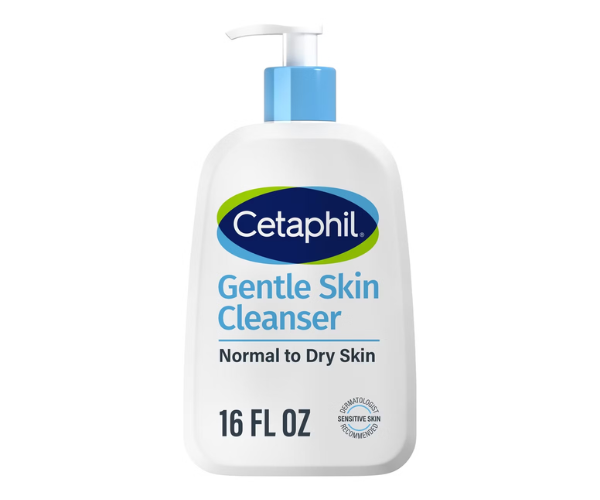
My go-to: Cetaphil Gentle Skin Cleanser — the boring answer that is also the correct answer. Fragrance-free, non-comedogenic, dermatologist-recommended for decades. If it’s not broken, don’t fix it.
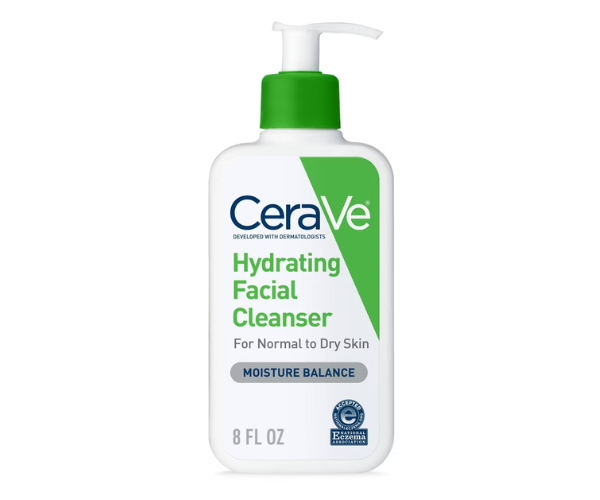
Potential to try: CeraVe Hydrating Cleanser — a step up from Cetaphil with the addition of ceramides and hyaluronic acid that actively restore your skin barrier while cleansing rather than just cleaning. Same gentle, fragrance-free philosophy, slightly more targeted ingredients.
Step 3 — Toner The step most people skip and shouldn’t
Modern toners are not what your mother’s toner was — harsh, stripping, smelling faintly of rubbing alcohol. A good modern toner preps your skin to absorb everything that comes next. Applied correctly — a nickel-sized amount on your fingers, pressed gently across your face — it takes about two minutes to absorb. I do mine during teeth brushing time. Multitaskingfor the win.

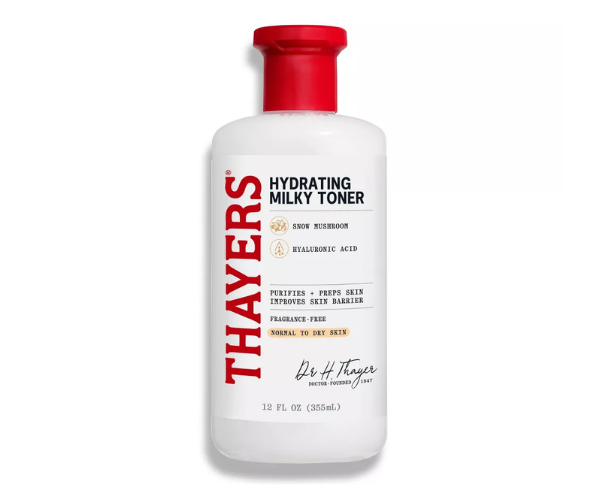
My go-to: Thayers Milky Hydrating Face Toner with Snow Mushroom and Hyaluronic Acid — lightweight, hydrating and gentle. The hyaluronic acid starts the moisture-drawing process before your serum or moisturizer even touches your skin. This bottle lasts a long time, so around $15 for your toner is worth it here.
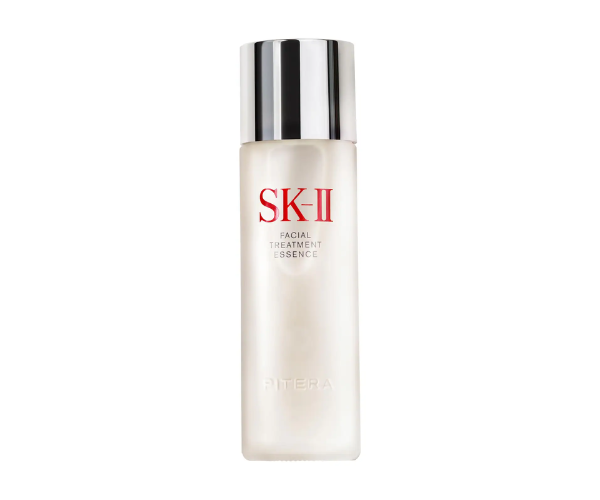
Potential to try: SK-II Facial Treatment Essence — technically an essence rather than a toner but functions as both. Tons of reviews at Sephora, touting a 4.1-star average, it contains AHAs including malic and lactic acid to remove pore-clogging debris and dead skin cells, plus salicylic acid to minimize breakout-inducing oils — and it’s alcohol-free so it won’t dry you out. Around $185 for a full bottle — we’ll see if I’m ever ready to make this kind of investment for toner.
Step 4 — Retinol The one ingredient dermatologists universally agree on
If you do nothing else from this post — start retinol. It’s the single most evidence-backed anti-aging ingredient available without a prescription. It increases cell turnover, stimulates collagen production and unclogs pores. Fine lines, uneven texture, dullness — retinol addresses all of it over time.
I focus mine around my eyes, smile lines and forehead — the areas where I’m most concerned.
Two things to know before you start:
Almost everyone experiences some irritation initially — redness, flaking, sensitivity. This is normal and it passes. Start two to three nights per week and build up slowly to nightly use.
Never skip SPF the next morning. Retinol increases your skin’s sun sensitivity significantly. Sunscreen is non-negotiable when you’re using retinol.

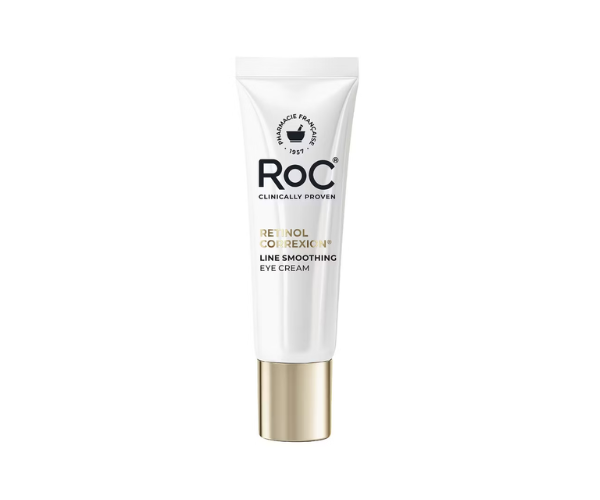
My go-to: RoC Retinol Correxion Line Smoothing Eye Cream — Yep. That brand that your mom used, it’s your turn now. I do love that it’s accessible, drugstore available and consistent. I use the eye-area formula which is gentler than a full-face retinol for someone just getting started or focusing on specific areas.
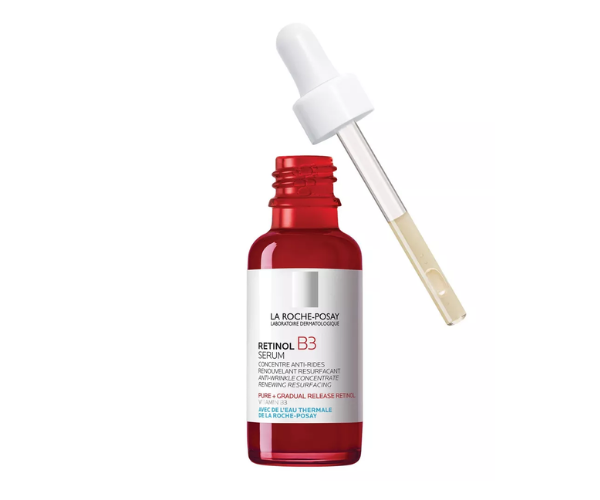
Worth knowing: a dedicated retinol serum applied to the full face is the more complete approach — the eye cream is my current entry point. Now that my tolerance is built, it’s time to graduate to a full-face formula. Next purchase for me when my tube runs out (what timing, that is actually now!) is the La Roche-Posay Pure Retinol Face Serum — Dermatologist approved, formulated with pure retinol and vitamin B3, designed specifically for sensitive skin.
Step 5 — Vitamin C (on rotation — needs to be more consistent)
Here’s where I have to be honest with you. I was using a vitamin C serum every other night and then fell out of the habit. That’s on me. It’s going back in.
Vitamin C is an antioxidant that neutralizes free radicals — unstable molecules from pollution and UV exposure that break down collagen. Used consistently it brightens skin, fades dark spots and protects against environmental aging. It works best in the morning to fight daily sun damage but works at night too.
The honest truth about the one I was using: Naturium Vitamin C Complex Serum — I didn’t love it. It didn’t seem to last long enough for the cost and I wasn’t seeing results that made me want to reach for it consistently. That being said, lots of folks love it per the reviews and everyone’s face is different!

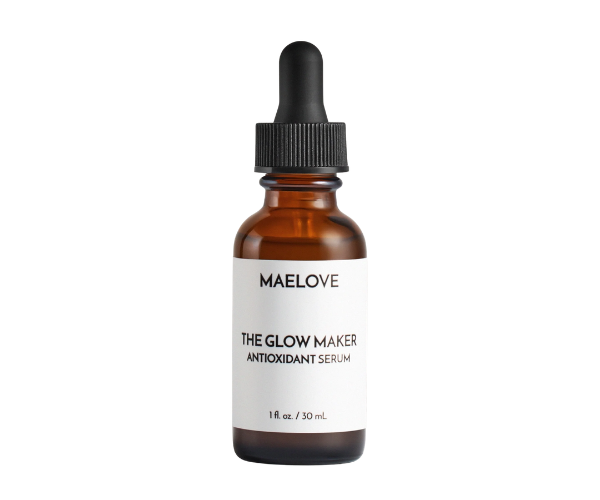
What I’m trying next: Maelove Glow Maker — considered by skincare enthusiasts to be an affordable alternative to SkinCeuticals with vitamins C and E, ferulic acid and hyaluronic acid, with reviewers noting their dermatologist was impressed by results. Around $26. On my list!
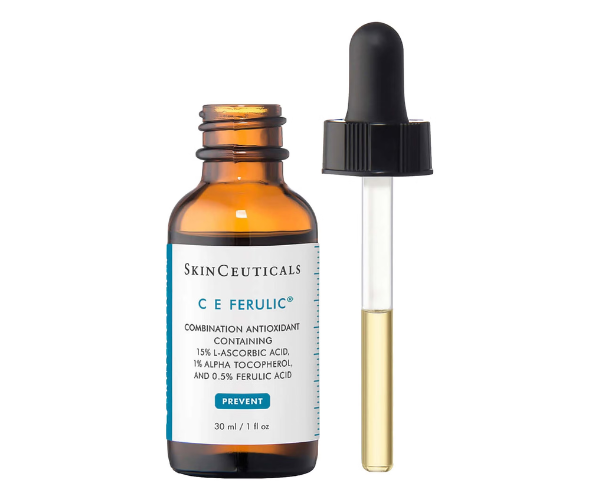
The gold standard if you’re ready to invest: SkinCeuticals C E Ferulic — the dermatologist’s go-to recommendation for nearly two decades, clinically proven to provide eight times the skin’s natural protection against environmental damage. $185 for 1oz. Genuinely aspirational but genuinely proven.
Important note: don’t use vitamin C and retinol at the same time. They can destabilize each other and cause irritation. Vitamin C in the morning, retinol at night — or alternate nights (which is what I did when I was diligent with my vitamin C usage!)
Step 6 — Moisturizer Seal everything in
Your moisturizer is the last step and possibly the most important — it locks in everything you just applied and repairs your skin barrier while you sleep. Do not skip this step. Do not use something thin and watery. You want something substantial enough to genuinely seal things in.

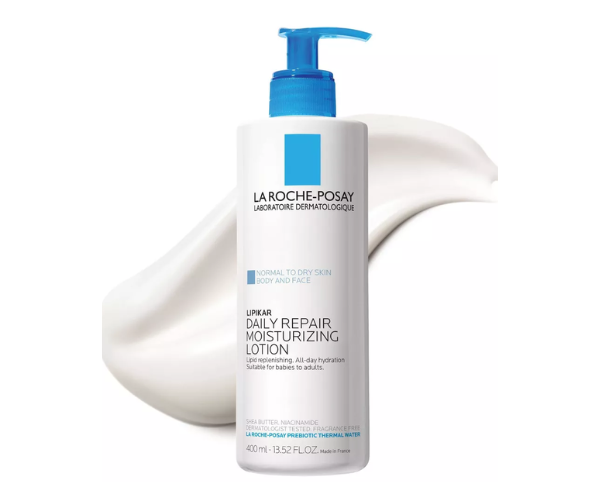
Most dermatologists agree on this one and I do too: La Roche-Posay Lipikar Daily Repair Moisturizing Lotion — thick, fragrance-free, ceramide-rich, barrier-repairing. It’s technically marketed as a body lotion but works beautifully on the face and is one of the most consistently dermatologist-recommended moisturizers at any price point. I’ve been using it for years and love it.
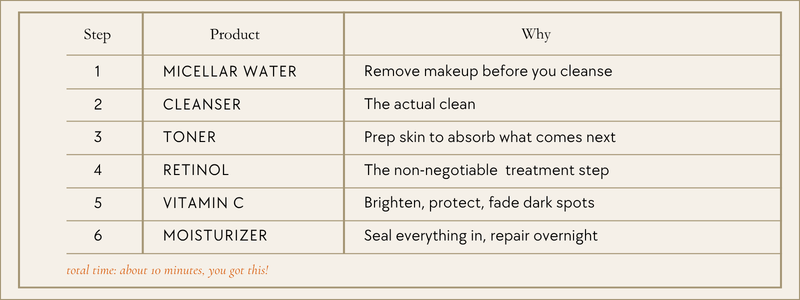
The complete bedtime routine at a glance:

One thing I want to say before you go
You do not need to have this perfectly figured out to start. Frack, I don’t. I fell off my vitamin C habit. My skin still isn’t perfect. My routine has evolved over time and it will keep evolving.
What matters is showing up consistently with the basics — cleanse, treat, moisturize — and adding layers as you learn what your skin responds to. That’s what BABBLE is here for. We figure this out together.
Until I babble again, Carli
P.S. Coming soon — the ingredients you should never mix at night. Because combining the wrong actives can quietly undo everything you just did. Stay tuned.