Hey there.
Let’s talk about something most people have never considered as part of their bedtime routine.
What does your bedroom smell like right now?
Not asking that in a judge-y way — but take a second to stop and really think about it. You may not realize it, but it actually matters more than most of us realize. Your sense of smell connects directly to your brain’s limbic system — the region responsible for emotions, memory and relaxation. You’ve heard this before, you know those chocolate cookies that remind you of walking into your grandma’s house? Or the smell of Downy that intruded your nasal passages when you walked into your front door as a kid? And how those scents bring you right back to that space? It’s the same with your bedroom and bedtime routine. The right scent before bed doesn’t just smell good. It actually signals your nervous system that the day is over. Used consistently, it can condition that response over time.
That’s not wellness marketing. That’s neuroscience.
Here’s my recommendation for what your bedroom should smell like — and how to get there.
First — why scent works for sleep
The right fragrance before bed tells your body that it’s time to slow down — and when used consistently, it can actually condition that ‘slow down’ response. Think Dwight from The Office and that breath mint…aka the Pavlovian effect.
Certain fragrance compounds have real research behind them. Linalool in lavender, santalols in sandalwood, vanillin in vanilla, alpha-bisabolol in chamomile and the terpenes in cedarwood all interact with the nervous system in ways researchers have studied for years. What’s crucial for you is to be choosing a delivery method that actually gets those compounds into the room — and quality products that aren’t full of synthetic fillers working against you.
Let’s be clear, a candle won’t fix insomnia. But the right scent at bedtime can help signal that the day is over, it’s time to begin turning off that ever moving brain of yours. And that signal — repeated consistently every single night — becomes a ritual. The ritual becomes the routine. The routine becomes the wind-down for potentially better and quicker to-sleep.
Second — how to actually get the scent in the room
By Diffuser
I am in love with my essential oil diffuser. While a bigger investment at the start, you get so much more time and use out of it than a candle. It can run for 8 hours, constantly dispersing scent into your room — and there’s no thoughts of ‘did I blow out that candle?’ when you leave the house. I’ve drank the kool-aid and you should too.
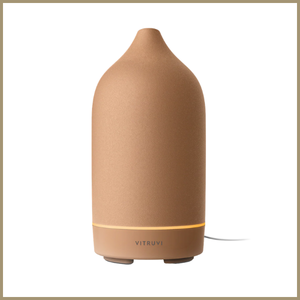
A quick plug for my favorite tried-and-true diffuser, the VITRUVI Stone Essential Oil Diffuser. I’ve had it for years, and while it’s beginning to show its age, I’ve had no issues with mold or functions. It’s a beautiful piece on my dresser and I love that it disperses a light scent all day that I can change out based on my mood. My personal favorite – lavender and lemon. But we can go into different recipes at a later time…
Note that I did say essential oil diffuser. Meaning no, you don’t use one of those fragrance oils in this vessel, you use exclusively essential oils and essential oil blends.
By Candle
Love of the diffuser aside, candles hold a serious place in my heart. The flicker in a dark room at the end of the day — there’s something magical about the ambience it creates. My personal approach: diffuser for the days when I’m in and out of the house. Candle for the evenings when I’m staying in, winding down and want a full sensory atmosphere.
One second, before you fall down the candle rabbit hole we need to talk about what you’re actually paying for when it comes to candles. Here’s what that price tag actually means:
Under $25 — a clean, well-performing candle that smells good and burns safely. The non-negotiables apply here the same as everywhere else: phthalate-free, cotton wick, soy or beeswax base. Everything above that is a bonus. The Quince Lavender Cedar fits here — fragrance oil but phthalate-free, soy coconut wax, cotton wick, clean burn. Around $20. [link]
$25–$45 — a considered scent profile and a vessel worth keeping. The candle as a designed object that belongs on your nightstand. At this tier you’re getting intentional fragrance development and packaging that doesn’t go straight into the recycling bin.
$45–$100 — botanical ingredients, small-batch production and a scent that’s genuinely distinctive. The candle as a ritual object. At this tier the vessel stays long after the wax is gone — it becomes a small bowl, a catch-all, a nightstand object in its own right.
Over $100 — you’re buying the story, the heritage and the scent people ask about when they walk into your bedroom. Diptyque. Le Labo. Cire Trudon. The icon. Worth it if it’s worth it to you.
At every price point the non-negotiables are the same: phthalate-free, cotton wick, soy or beeswax base. Everything above that is personal.
One more thing before the picks — essential oil candles vs fragrance oil candles
This question deserves a real answer.
Pure essential oil candles are cleaner and more therapeutic — they deliver the actual compounds like linalool and santalols that interact with your nervous system. The honest trade-off: softer scent throw. They won’t fill the room. They’ll fill your immediate atmosphere — which for a bedroom ritual is exactly what you need and all you need.
Phthalate-free fragrance oil candles are clean burning and room-filling. The scent is synthetic but the experience is powerful. They won’t deliver the therapeutic compounds. But they smell genuinely beautiful and the ritual still works.
The honest answer: for the therapeutic sleep benefit — essential oil diffuser or pure essential oil candle. For the atmosphere and ambience — a well-made phthalate-free fragrance oil candle. For both simultaneously — diffuser running AND candle burning. That’s the BABBLE approach.
By Pillow Spray
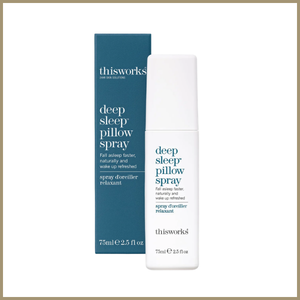
A few spritzes of a lavender or chamomile pillow spray directly onto your pillowcase before you lie down. The scent is right there as you drift off. This Works Deep Sleep Pillow Spray is the cult favorite for good reason. Around $12.
By Linen Spray
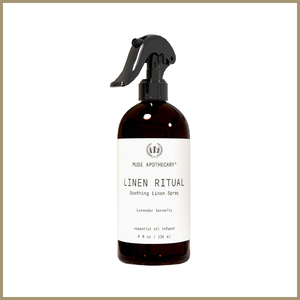
Spray your duvet, your pillowcases and your bedside area lightly about 20 minutes before bed. The whole sleeping environment becomes the scent rather than just one point source. Try this one from Muse Apothecary in Lavender Serenity— lavender, chamomile and eucalyptus, over 4,800 five-star reviews, plant-based, under $10.
Finally — Scents
Lavender — the one with the actual research behind it
If you’ve heard one thing about sleep and scent it’s probably that lavender helps you sleep. This one is true and the research to back it up is extensive. Lavender has been associated with improved sleep in multiple research studies, including in some people with insomnia. Its calming aroma is known to lower both heart rate and blood pressure, fostering a deep state of relaxation. Studies have demonstrated that lavender exposure before bed can increase slow-wave sleep — the restorative phase crucial for body repair and memory consolidation.
The honest caveat: a lot of lavender products are very synthetic and very sharp. Real lavender essential oil or a clean candle made with genuine lavender compounds is a completely different experience from a purple-labeled candle that smells like a cleaning product. Unfortunately a lot of lavender essential oils on the market are diluted with synthetic compounds or cheaper lavandin, a hybrid variety with a sharper medicinal scent, to cut costs. The label says lavender. The bottle smells like lavender. But you’re not getting the therapeutic compounds that have the actual research behind them.
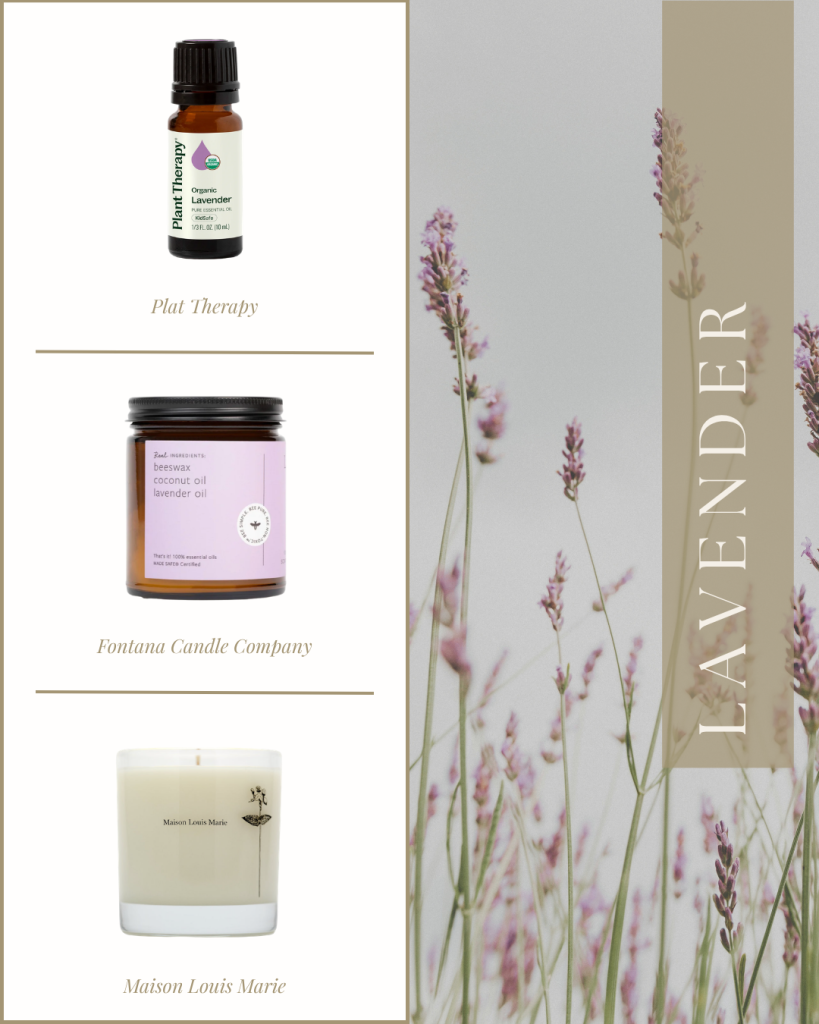
Essential Oil Pick: Plant Therapy Organic Lavender Essential Oil
8-10 drops of Plant Therapy Organic Lavender into your diffuser 60 minutes before bed on a 4 hour timer cycle. That’s the whole routine.
Couple notes on lavender essential oils:
Watch for the Latin name on the label: Lavandula angustifolia — that’s true lavender. If it just says lavender with no botanical name that’s a flag.
Country of origin — Bulgaria and France are the gold standard growing regions for therapeutic lavender.
Therapeutic Candle pick: Fontana Candle Company — MADE SAFE certified, beeswax and coconut oil base, 100% essential oils, crackling wooden wick. The purist’s bedroom candle. Completely transparent about every ingredient. The lighter scent throw is a feature not a flaw — this is the candle for someone who wants the compounds, not just the atmosphere.
Atmospheric Candle Pick: Maison Louis Marie Antidris Lavender — lavender and eucalyptus grounding into warm amber and earthy vetiver. A modern, considered lavender that doesn’t smell like a grandmother’s bathroom. Phthalate-free, soy wax, vegan.
Chamomile — the underrated one
Yes, I’m spilling the tea on chamomile… Jokes aside, the scent does carry the same calming qualities. It interacts with the relaxation centers of your brain and the fragrance itself is soft, sweet and herbaceous. And if you want to build a more complex scent story in your bedroom, it layers well with lavender and vanilla.
Chamomile is a great soft and floral scent for those who just can’t jump on the lavender train.
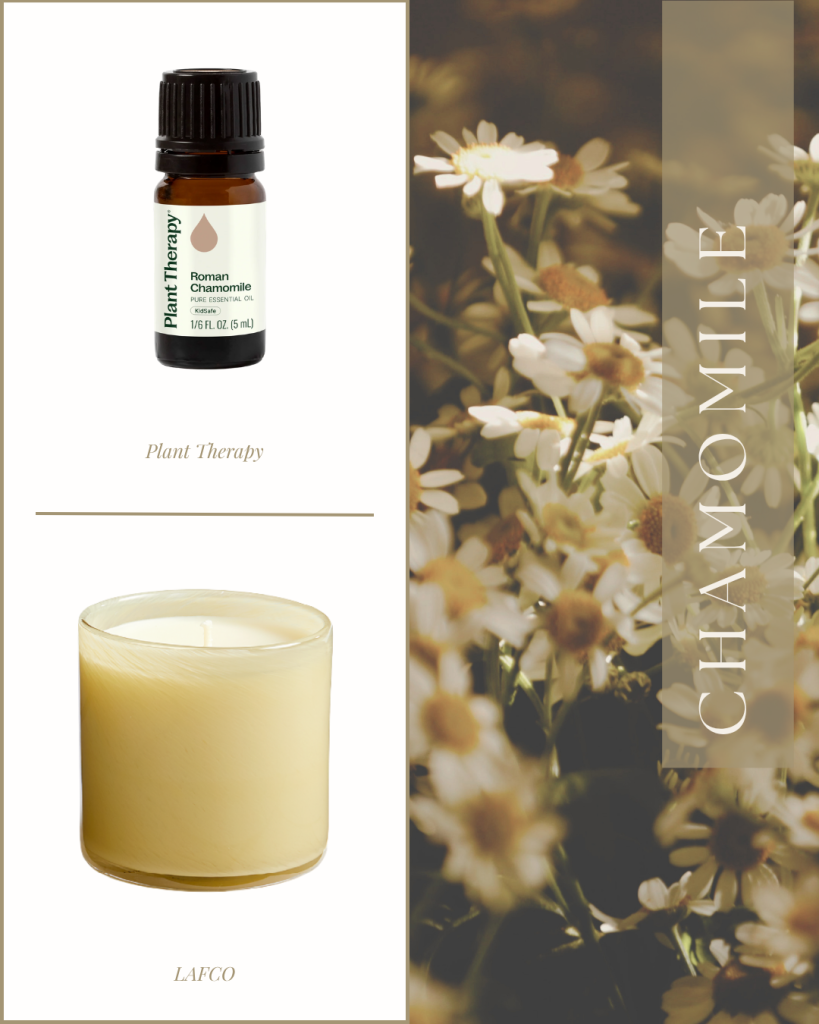
Therapeutic Scent Pick: Plant Therapy Organic Roman Chamomile
Note: Roman not German — Roman is the sweet apple-scented variety used for aromatherapy. German chamomile is primarily a skincare oil.
Therapeutic candle pick: Truth time. I haven’t found a great option to share with you. Based on what I’ve found pure chamomile candles are rare because the essential oil is expensive and delicate — it doesn’t hold up well to candle heat. If you want the actual therapeutic alpha-bisabolol compounds, your diffuser is the right tool.
Atmospheric candle pick: LAFCO Chamomile Lavender — essential oil based fragrances, soy wax, cotton wick, phthalate-free, handblown glass vessel worth keeping.
Sandalwood — for the warm sleeper who finds lavender too sweet
Sandalwood has a heavier, earthier scent than the previous two. If bright and floral scents aren’t your jam, I would suggest trying sandalwood. Sandalwood contains santalols — compounds linked to reduced wakefulness and sedative effects in research settings.
Sandalwood is the bedroom scent for the person who wants warmth and depth rather than floral softness. Sandalwood makes a room feel like a considered, grounded space rather than a spa. Note that it pairs nicely with amber and cedarwood.
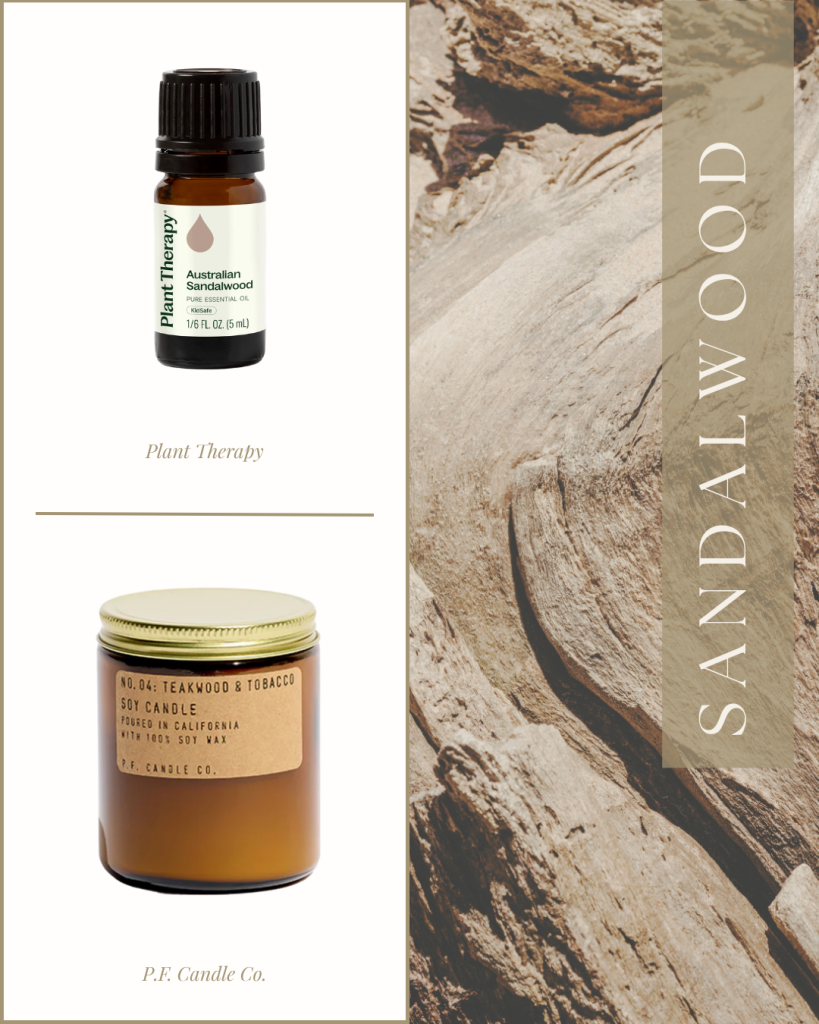
Essential Oil Pick: Plant Therapy Australian Sandalwood — GC/MS tested, genuine santalol content. Around $15.
Therapeutic candle pick: Shoot. Here we are again. Like chamomile, pure sandalwood essential oil candles are genuinely rare — real sandalwood essential oil is expensive enough that no candle makers I could find use it as the primary ingredient. What you’ll find marketed as sandalwood is almost always a fragrance oil, even from clean brands. If the therapeutic santalols are what you’re after, your diffuser with Plant Therapy Australian Sandalwood is the honest answer. However! The atmospheric picks below deliver the scent experience you’re after.
Atmospheric candle pick: P.F. Candle Co. Teakwood + Tobacco — warm, woody, grounding
Aspirational atmospheric candle: Le Labo Santal 26 — the candle that serious fragrance people reach for. Sandalwood, leather and amber
Cedarwood — the grounding one nobody talks about enough
Cedarwood contains cedrol, which has shown sedative activity in inhalation studies. It’s a dry, grounding scent that pairs well with other sleep-friendly scents without being overpowering.
Think of cedarwood as the base note of a good night’s sleep. It grounds everything else — pairs with lavender for softness, with sandalwood for depth, or works beautifully alone for the minimalist who wants their bedroom to smell like a quiet forest.
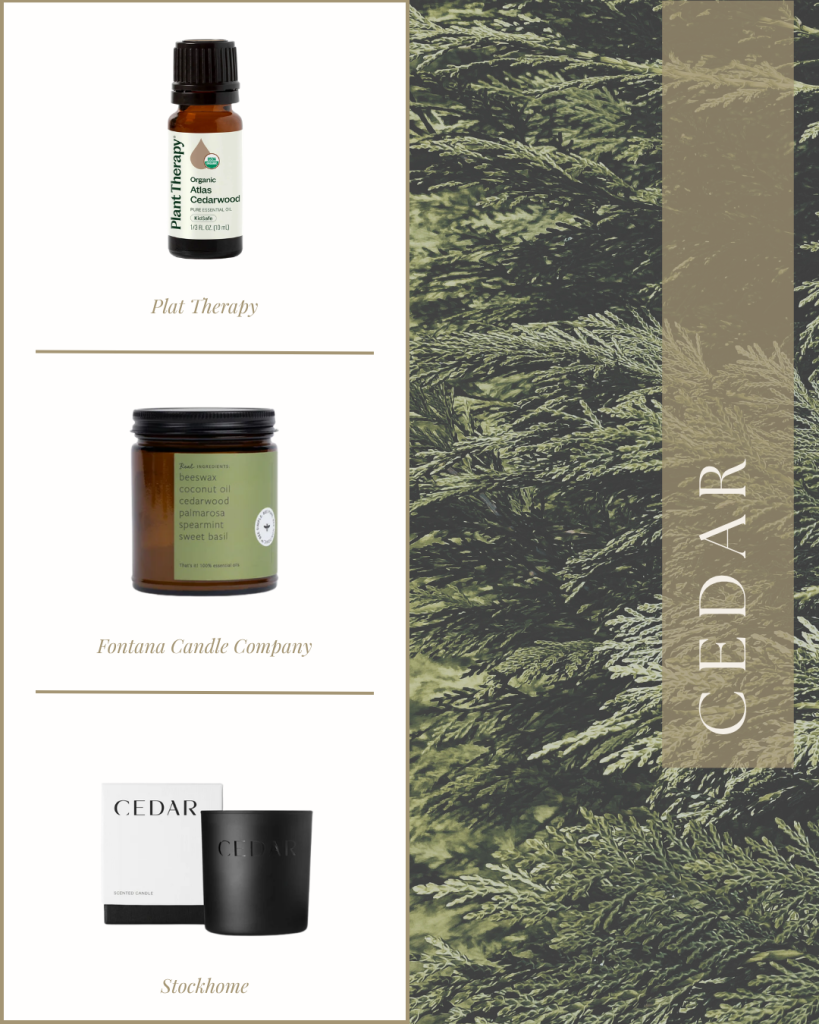
Essential Oil Pick: Plant Therapy Organic Cedarwood Essential Oil for the diffuser specifically — USDA organic, GC/MS tested, the clean cedarwood for aromatherapy
Therapeutic candle pick: Fontana Candle Company Hidden Path — Fontana for the win again! Not beating a dead horse and I am not sponsored. Their essential oil candle line has some of the strongest credentials in the pure EO category for candles.
Atmospheric candle pick: Studio Stockhome Eclipse Cedar — cedar, guaiacwood, sandalwood, smoke and amber. Natural wax blend, phthalate-free, cotton wick, hand-poured in California. A BABBLE pick due to this glowing review, ‘Smells like camping in the redwoods. It’s my new go to scent.’ Will definitely be purchasing as soon as possible.
Vanilla — the warmth scent
Vanilla contains vanillin which has been studied for its anxiolytic properties. It tends to reduce startle responses and lower anxiety markers. Practically, it smells warm and familiar — which itself has a calming effect for most people.
Vanilla is warm, familiar and universally calming in a way that feels less clinical than lavender. The risk is that cheap vanilla candles smell like your 8th grade lotion — which is not what you want in your sophisticated and grown up bedroom. Look for vanilla that’s warm and complex rather than sweet and synthetic.
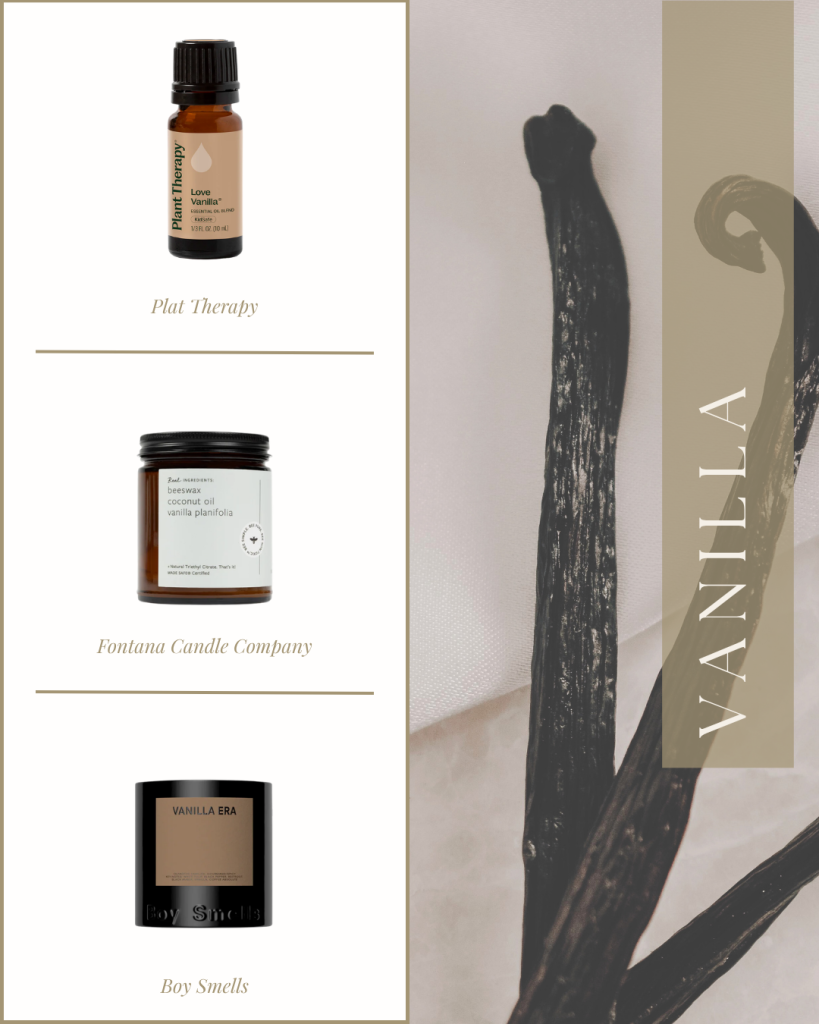
Essential Oil Pick: Plant Therapy Love Vanilla Blend*
*On my to try list! Note that this is a blend because vanilla isn’t technically an essential oil. I really do want to try this blend though to see if it’s as good as those reviewers say.
Therapeutic Candle Pick: Fonata Candle Company Pure Vanilla Candle Jar – meets Fontana’s ingredient standards for purity, and burns evenly and clean. One of their most requested scents!
Atmospheric Candle Pick: Boy Smells Vanilla Era — vanilla absolute with black amber, coffee and smoldering incense. Phthalate-free, paraben-free, coconut and beeswax blend, cotton wick, hand-poured in LA. The sophisticated grown-up vanilla your bedroom deserves.
If you’re starting from zero, start with lavender. It has the most research, the most accessible products and the most forgiving learning curve. Everything else on this list is there for you when you’re ready to build.
A rule of thumb about bedroom scents and their effectiveness:
Consistency. The Pavlovian effect only works as a sleep signal if you use it consistently. Your brain needs to learn the association — this smell means it’s time to wind down — and that learning takes repetition. Pick one scent, use it every night for two weeks and notice what happens when you smell it outside of the bedroom. That involuntary exhale? That’s it working.
All this to say, if you’re like me and you can sleep anywhere, you don’t need a trigger to relax and go to sleep, having a bedtime scent feels incredibly luxurious. An experience you deserve.
A note on how these recommendations work:
I try to burn a candle nightly and I have been diffusing lavender for years — those are personal. The specific candle and essential oil picks throughout this post are a combination of personal use, rigorous research and honest vetting against the non-negotiables established above. Where I have personally burned a specific candle— you’ll know.
No recommendation goes up without either personal testing or research I’d stake my credibility on. The candle buying framework is real. The science is real. But remember that all of our noses are different and scents are incredibly personal. What sends me straight to sleep might have you rarrin’ and ready to go! Use this post as a starting point, not a prescription.
You deserve to know the difference.
Until I babble again, Carli
P.S. The full bedtime routine — not the 60 step routine, but the real life 6 steps — is in the Skincare 101 post. But your scent starts there too, in the bathroom, before you ever get to the bed.